
Back to the Basics
Updated nutrition guidelines turn food pyramid on its head
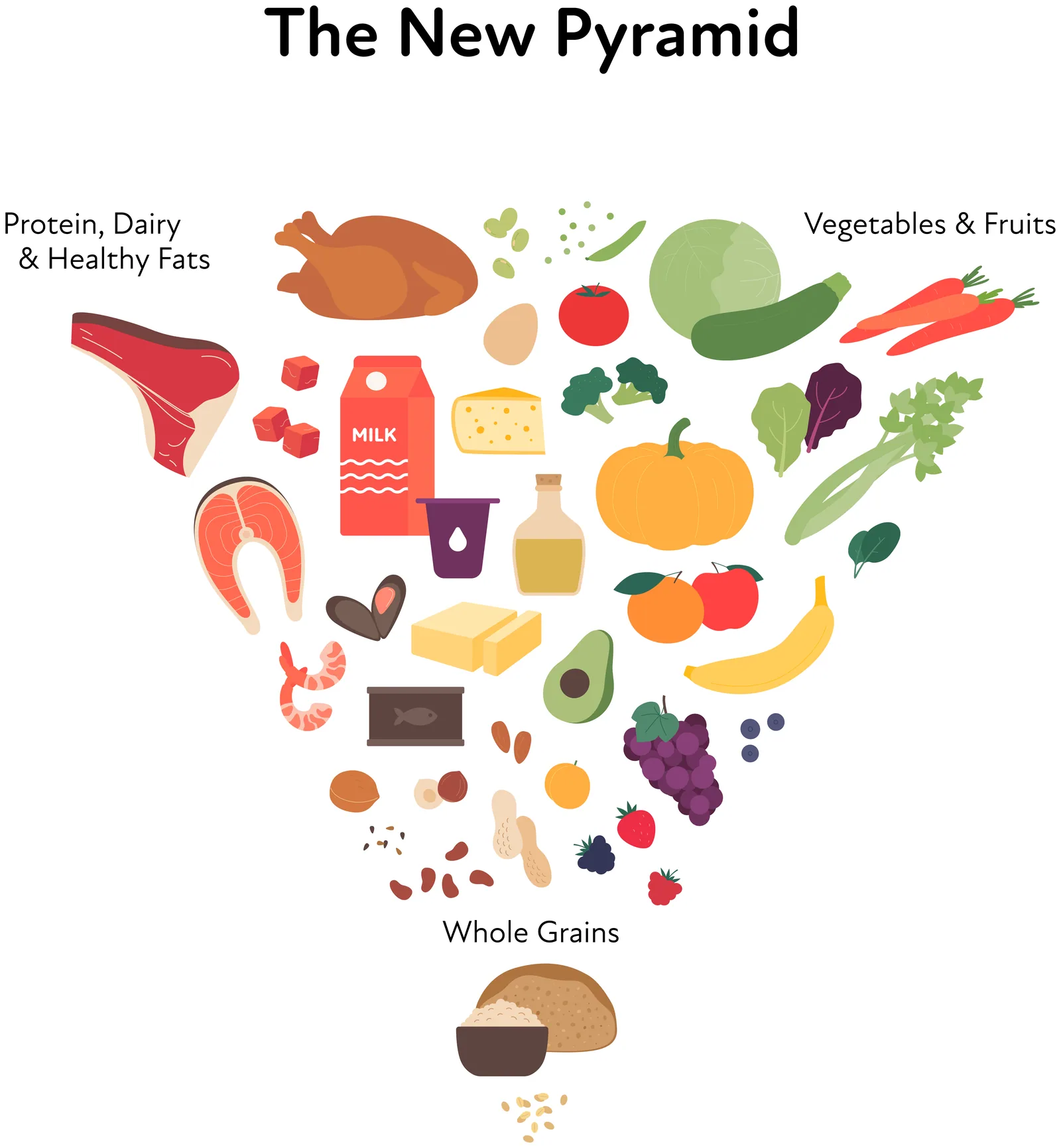
The food pyramid is back, but the new version is inverted and some of its recommendations are marked changes from the original graphic released by the U.S. Department of Agriculture in 1992.
The updated pyramid is included in the “Dietary Guidelines for Americans, 2025-2030” released in January by U.S. Health and Human Services Secretary Robert F. Kennedy. The “Make America Healthy Again” initiative prioritizes a “return to the basics” and prioritizing diets built on whole, nutrient-dense foods: protein, dairy, vegetables, fruits and healthy fats and whole grains.
The guidelines also emphasize hydration as an essential aspect of healthy living and provide a reminder that sodium is an essential electrolyte.
The guidelines advise avoiding added sugars entirely and reducing the consumption of highly processed foods laden with refined carbohydrates, added sugars, excess sodium, unhealthy fats and chemical additives.
Added Sugar
The guidelines state no amount of added sugars or non-nutritive sweeteners is recommended or considered part of a healthy or nutritious diet. For children 4 years and younger, the recommendation is complete avoidance of added sugars and artificial sweeteners.
Some foods and drinks, such as fruits and plain milk, have naturally occurring sugars. The sugars in these foods are not considered added sugars.
Added sugars may appear on ingredient labels as high-fructose corn syrup, agave syrup, corn syrup, rice syrup, fructose, glucose, dextrose, sucrose, cane sugar, beet sugar, turbinado sugar, maltose, lactose, fruit juice concentrate, honey, and molasses.
Non-nutritive sweeteners include aspartame, sucralose, saccharin, xylitol and acesulfame.
Protein
Consume a variety of protein foods from animal and plant sources.
Good sources:
- eggs
- poultry
- seafood
- red meat
- nuts and seeds
- beans, lentils, legumes and tofu
Serving goals: 1.2–1.6 grams of protein per kilogram of body weight per day, adjusting as needed based on individual caloric requirements.
Vegetables and Fruits
- Eat a variety of colorful, nutrient-dense whole vegetables and fruits
- Frozen, dried, or canned vegetables or fruits with no or very limited added sugars can also be good options
- 100% fruit or vegetable juice should be consumed in limited portions or diluted with water
Serving goals: Vegetables: 3 per day | Fruits: 2 per day
Whole Grains
Prioritize fiber-rich whole grains, and significantly reduce the consumption of highly processed, refined carbohydrates such as white bread, ready-to-eat or packaged breakfast options, flour tortillas and crackers.
Good sources:
- brown rice
- rolled or steel-cut oats
- quinoa
- farro
- whole wheat
Serving goals: 2-4 per day
Healthy Fats
When cooking with or adding fats to meals, prioritize oils with essential fatty acids, such as olive oil. Other options include butter or beef tallow.
Fat consumption should not exceed 10% of total daily calories, and saturated fat intake should be closely monitored in people with high cholesterol, high blood pressure or a family history of cardiovascular disease.
Good sources:
- eggs
- omega 3-rich seafood
- nuts and seeds
- full-fat dairy
- olives/olive oil
- avocados/avocado oil
Your Daily Dose
The recommended daily intake, based on a 2,000-calorie diet
- Grains: 6 ounces. Note: Equivalent to 3/4 cup cooked rice, pasta or cereal
- Vegetables: 2 1/2 cups. Note: 2 cups leafy salad greens equals 1 cup vegetables
- Fruits: 2 cups. Note: 1/2 cup 100% raw fruit juice equals 1 cup fruit
- Protein: 5 1/2 ounces
- Fat-free/low-fat dairy: 3 cups. Note: 1 1/2 ounces of natural cheese equals 1 cup milk or yogurt